5D BIM in Practice: Why Budgets Don’t Match Reality
Learn why 5D BIM fails without data integration and how to improve cost accuracy, forecasting, and project profitability.

5D BIM in Practice: Why Your Budget Still Doesn’t Match the Construction Site
5D BIM, the integration of 3D models with cost and estimation, is often presented as a transformative solution for construction projects.
The promise is clear: select a model element and instantly understand its cost impact. Yet, for many organizations, the reality is different. Despite advanced models, procurement teams still rely on spreadsheets, and “planned vs. actual” reports reveal significant deviations.
The issue is not the concept of 5D BIM itself. It is the lack of continuous, structured data flow. Without it, organizations do not have true 5D BIM, only disconnected tools operating in parallel.
The Missing Link: Information Standardization
The primary barrier to effective 5D BIM is not software capability, but data alignment between departments.
For cost data to flow from the model to the budget, geometry must be enriched with structured, consistent information that aligns with financial systems.
The Core Challenge
Modeling perspective: Elements are named based on geometry (e.g., “15cm masonry wall”)
Estimating perspective: Costs depend on materials, labor, and execution details
The Solution: Level of Information (LOI)
Implementing a Level of Information (LOI) framework ensures that each BIM object carries the necessary metadata for cost integration.
This includes:
Material specifications
Labor requirements
Standardized cost codes aligned with ERP systems
Without this structure, cost estimation remains manual and disconnected from the model.
The Three Pillars of High-Precision Estimating
Achieving reliable financial outcomes with 5D BIM requires a structured management approach built on three core pillars.
1. Automated Quantity Takeoff (QTO)
Manual measurements from 2D drawings introduce significant risk. A properly structured model enables accurate, automated quantity extraction.
Volumes, areas, and units are calculated directly from the model
Human error is significantly reduced
Key principle: If it is not modeled, it cannot be measured automatically. BIM Managers must ensure that extraction rules align with project measurement standards.
2. Dynamic Cost Linking
Cost does not exist in geometry, it exists in data relationships.
True integration occurs when BIM elements are directly linked to ERP cost codes using a consistent identifier.
Each object must have a matching cost code
Updates occur automatically when the model changes
Without this linking mechanism, every revision requires manual budget adjustments.
3. 4D + 5D Integration
Cost data gains strategic value when combined with time (4D). This integration enables cash flow forecasting and scenario analysis.
Examples include:
Evaluating the financial impact of accelerating project phases
Simulating changes in project timelines
Analyzing investment performance using financial metrics
This transforms BIM from a static model into a decision-making tool.
The Top ROI Killers in 5D BIM
Even with the right tools, several common mistakes can undermine the value of 5D BIM.
1. Inadequate Level of Development (LOD)
Over-modeling consumes time without generating proportional value.
Excessive detail increases complexity
Focus should remain on high-impact elements
Applying Pareto’s principle ensures that effort is directed toward the most critical cost drivers.
2. Static Cost Data
A budget that is not updated alongside model changes quickly becomes obsolete.
Discrepancies grow over time
Financial forecasts lose reliability
Cost data must remain continuously synchronized with the model.
3. Lack of Field Feedback
Without real-world input, cost models become disconnected from execution.
No validation of assumptions
Missed opportunities for process improvement
Integrating as-built data ensures that future estimates are more accurate and aligned with reality.
From 5D BIM Theory to Practical Value
Implementing 5D BIM is not just a technical upgrade, it is a shift in how organizations manage data across engineering, estimating, and construction.
When all stakeholders operate within a Single Source of Truth, the benefits become tangible:
Reduced waste and rework
Improved cost predictability
Greater alignment between planning and execution
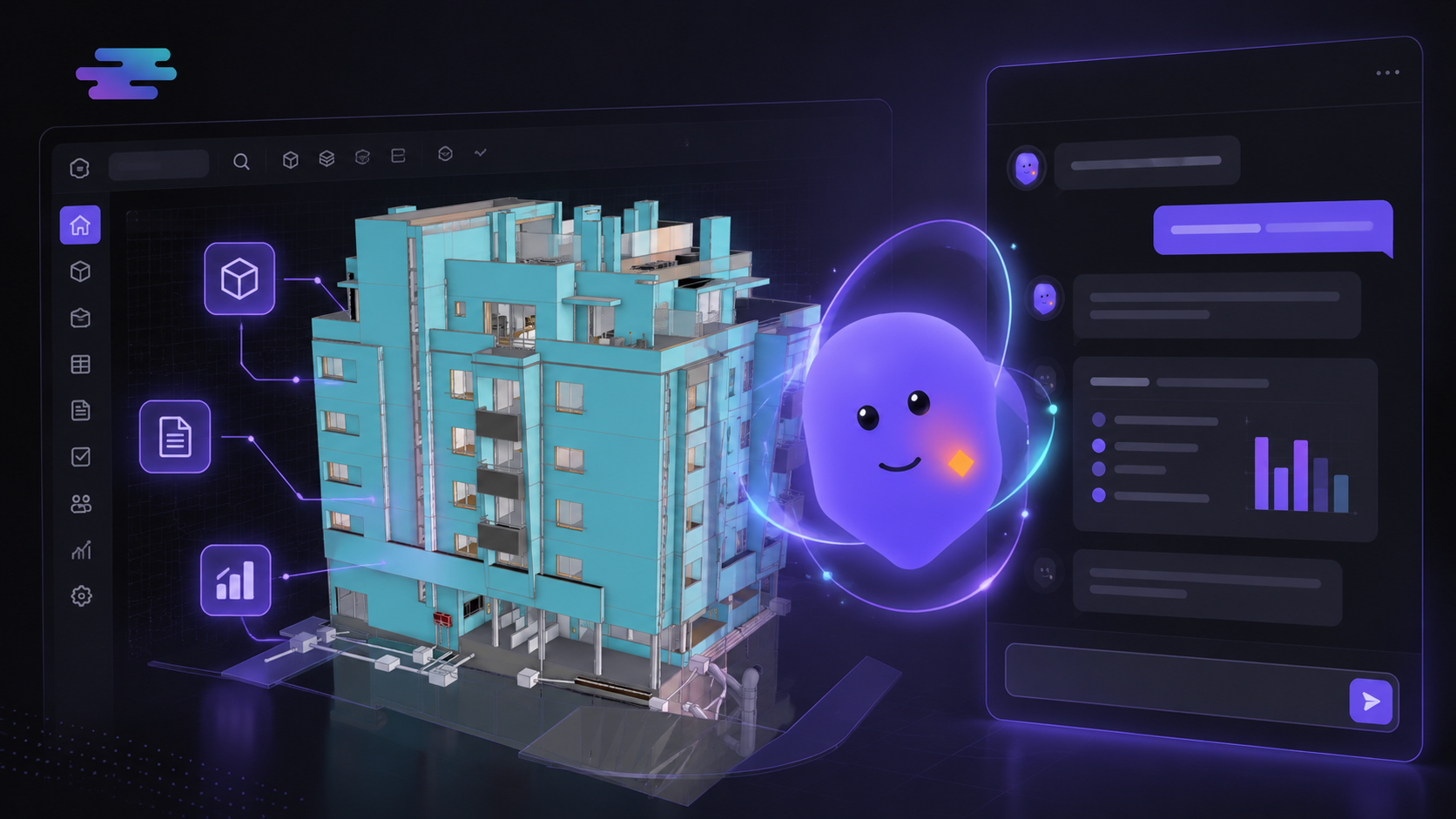
Platforms like BIMWorkplace support this integration by centralizing models, data, and workflows, ensuring that cost, time, and coordination remain aligned throughout the project lifecycle.
Conclusion
The challenge with 5D BIM is not adoption, it is execution.
Without structured data, standardized information, and integrated workflows, cost management remains fragmented and unreliable.
Organizations that successfully implement 5D BIM do not simply model costs, they connect data across systems, enabling informed decisions and protecting project profitability.
In a competitive industry with tight margins, data integration is no longer optional, it is essential.
Ready to see BIMWorkplace in action?
Centralize your project, your team, and your data in one platform built for AEC.
Get BIM insights in your inbox
Practical articles, product updates, and AEC best practices. No spam.