How BIM Methodologies Boost Company Profitability
Learn how BIM methodologies improve profitability by reducing errors, optimizing workflows, and enabling better decision-making in construction projects.

How BIM Methodologies Boost Company Profitability
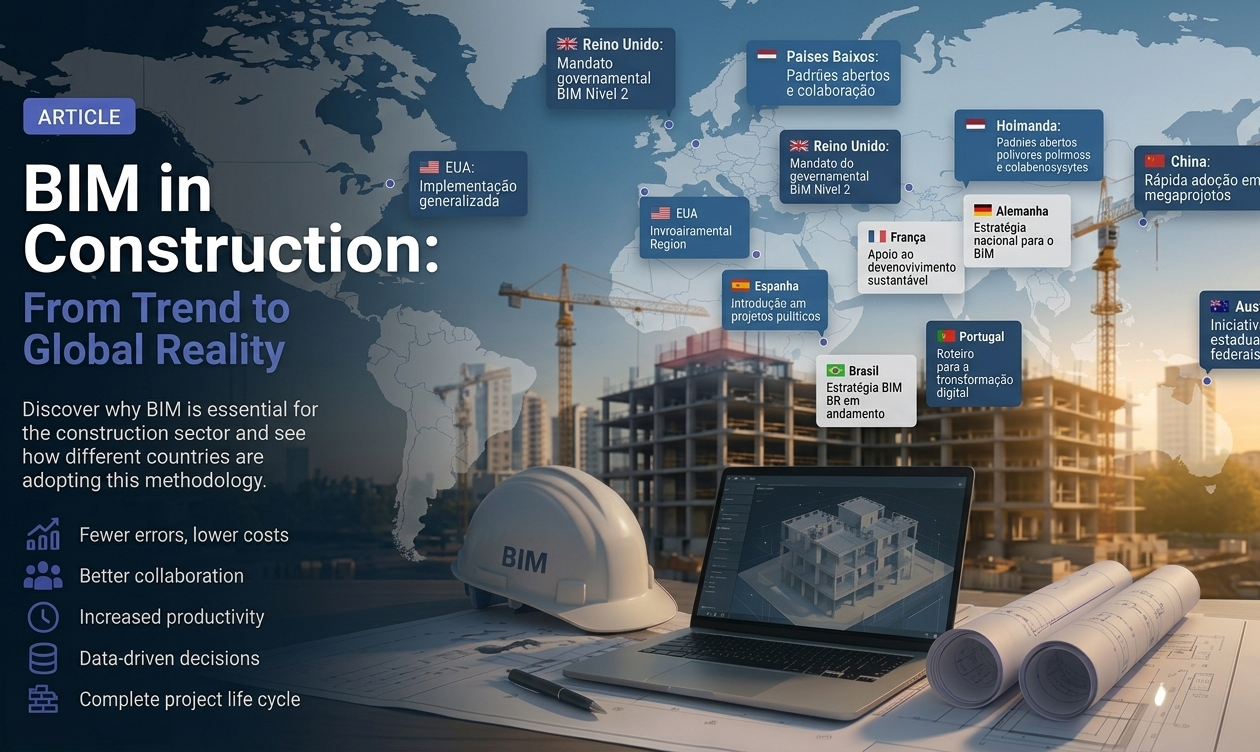
In the AEC industry, Building Information Modeling (BIM) is no longer optional for companies aiming to remain competitive. Despite this, some organizations still delay adoption due to concerns about initial investment costs.
This hesitation often leads to hidden losses. Inefficient workflows, poor coordination, and avoidable errors generate costs that exceed the investment required to implement BIM effectively.
The Cost of Delaying BIM Adoption
Postponing BIM adoption impacts both operational efficiency and financial performance. Without a structured methodology, projects are more exposed to rework, delays, and miscommunication.
Common cost drivers include:
Material waste due to inaccurate planning
Design conflicts identified too late
Low productivity caused by fragmented workflows
Although BIM requires an initial investment, the real financial risk lies in maintaining inefficient processes.
Key BIM Benefits That Drive Profit
BIM improves profitability by increasing control over data, processes, and decision-making. While adoption may require organizational adjustment, the financial impact becomes clear over time.
Accurate Quantity Takeoffs and Cost Estimation
BIM enables precise extraction of quantities and material data, supporting reliable budgeting and reducing the risk of cost overruns.
Improved Project Scheduling
With BIM, teams can structure project timelines more effectively, ensuring better coordination between phases and minimizing delays that impact costs.
Automated Clash Detection
BIM tools identify design conflicts automatically, allowing teams to resolve issues before construction. This reduces rework and prevents costly on-site errors.
Data-Driven Decision Making
Access to structured project data enables proactive decision-making. Teams can evaluate scenarios, anticipate risks, and optimize execution strategies.
Integrated Collaboration Across Disciplines
BIM connects all stakeholders within a shared environment, improving communication and ensuring alignment across design, planning, and execution.
Higher Quality Deliverables
The consistency and accuracy of BIM data lead to better project outcomes, reducing revisions and increasing client satisfaction.
Why BIM Is a Strategic Investment
BIM should be viewed as a long-term operational strategy, not just a technology investment. Companies that adopt BIM improve efficiency, reduce risk, and gain better control over project performance.
Key outcomes include:
Reduced operational costs
Improved productivity
Greater competitiveness in the market
Organizations that delay adoption risk falling behind competitors who already benefit from optimized workflows and data-driven processes.
Conclusion
BIM methodologies directly impact profitability by improving efficiency, reducing errors, and enabling better decision-making. The initial investment is offset by long-term gains in cost control and project performance.
Adopting BIM is not just a technical decision. It is a strategic move toward sustainable and scalable growth in the AEC industry.
Ready to see BIMWorkplace in action?
Centralize your project, your team, and your data in one platform built for AEC.
Get BIM insights in your inbox
Practical articles, product updates, and AEC best practices. No spam.