ISO 19650 in Construction: Why It Matters and How BIM Helps You Comply
Learn why ISO 19650 matters in construction and how BIM helps teams manage information, workflows, responsibilities, and compliance.
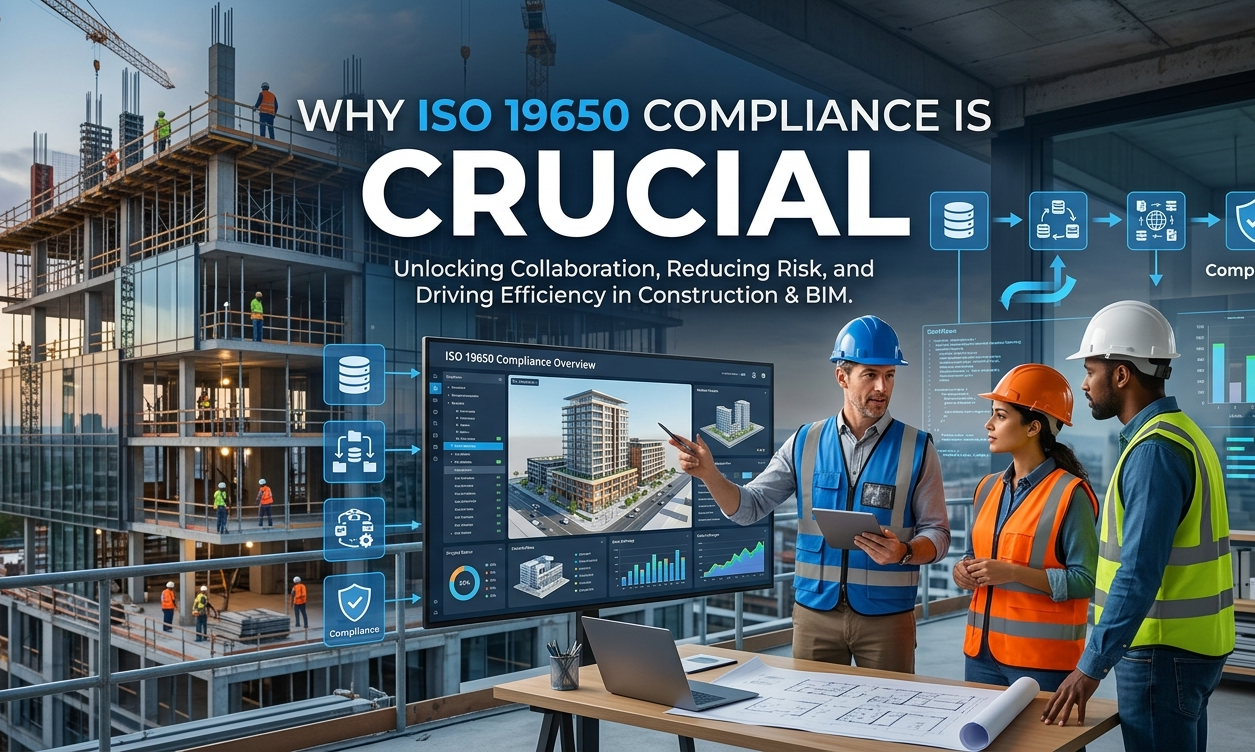
ISO 19650 in Construction: Why It Matters and How BIM Helps You Comply
In today’s construction industry, information is as critical as materials, labor, and equipment. Managing that information with precision, consistency, and accountability is no longer optional. It is essential for reducing risk, improving collaboration, and delivering better project outcomes.
This is why ISO 19650 in construction has become increasingly important across the AEC sector. The standard provides a structured approach to information management using BIM, helping teams define responsibilities, organize data, control exchanges, and support the full lifecycle of a built asset.
Why ISO 19650 Compliance Matters in Construction
ISO 19650 brings structure, standardization, and accountability to construction information workflows. Instead of relying on informal documentation, inconsistent file naming, and disconnected folders, it defines a clear framework for managing information from planning and design through construction, handover, operation, and maintenance.
ISO 19650 compliance is not just about meeting audit requirements. It is about creating a more reliable way to produce, approve, exchange, and use project information.
For construction teams, this means:
Reducing rework caused by outdated, incomplete, or inaccurate information
Ensuring that designers, contractors, consultants, and owners work from a single source of truth
Improving accountability by defining who is responsible for each information deliverable
Supporting future use cases such as digital twins, smart maintenance, and facility management
Creating more predictable workflows for information review, approval, and delivery
In short, ISO 19650 is not bureaucracy. It is a strategic framework for improving how construction information is managed.
Common Challenges When Applying ISO 19650
Although the benefits of ISO 19650 are clear, many project teams still struggle to apply it in practice. The issue is rarely the lack of good intentions. More often, the problem is the gap between the standard and day-to-day project workflows.
Lack of Familiarity With ISO 19650 Terms
Many teams have not worked directly with the ISO 19650 documents or are unfamiliar with terms such as OIR, AIR, PIR, EIR, BEP, MIDP, and TIDP. Without a shared understanding of these concepts, it becomes difficult to align deliverables with client expectations and project requirements.
Fragmented Information
Without a structured Common Data Environment (CDE), project files are often shared by email, stored in local folders, or exchanged through disconnected platforms. This creates version control problems and increases the risk of teams working with outdated models, drawings, or documents.
Undefined Responsibilities
ISO 19650 depends on clear information responsibilities. If teams do not define who produces, reviews, approves, and receives each information deliverable, coordination becomes weaker and delays become more likely.
Core ISO 19650 Concepts Explained Simply
The ISO 19650 series defines principles, processes, and requirements for managing information across the lifecycle of built assets. As of 2026, the series includes six published parts, covering concepts and principles, delivery, operation, information exchange, security-minded information management, and health and safety information.
For Project Managers and BIM Managers, the following concepts are especially important.
OIR: Organizational Information Requirements
Organizational Information Requirements (OIR) define the information an organization needs to support its business objectives, asset strategy, regulatory obligations, and operational decisions.
AIR: Asset Information Requirements
Asset Information Requirements (AIR) define the specific information needed to manage, operate, maintain, and evaluate built assets over time.
PIR: Project Information Requirements
Project Information Requirements (PIR) define what information must be delivered during a specific project to support decision-making, project controls, and stakeholder needs.
EIR: Exchange Information Requirements
Exchange Information Requirements (EIR) specify what information must be exchanged, when it must be delivered, in which format, and according to which standards or acceptance criteria.
BEP: BIM Execution Plan
The BIM Execution Plan (BEP) explains how the project team will meet the information requirements defined by the appointing party. It typically covers roles, responsibilities, workflows, software, coordination procedures, naming conventions, and collaboration methods.
MIDP: Master Information Delivery Plan
The Master Information Delivery Plan (MIDP) is a high-level schedule that defines what information will be delivered, by whom, and when across the full project scope.
TIDP: Task Information Delivery Plan
The Task Information Delivery Plan (TIDP) breaks the MIDP down into more detailed responsibilities for each discipline, team, or contributor.
The ISO 19650 Information Management Workflow
ISO 19650 introduces a structured process for producing, reviewing, approving, and delivering information. This helps teams avoid last-minute document chasing and creates a repeatable approach to information management.
The workflow typically includes:
Assessment and definition of information needs
Tendering and appointment
Mobilization of teams, tools, and processes
Collaborative production of information
Information model delivery
Project close-out and handover
This structure ensures that project information is created and reviewed in a controlled way, with clear responsibilities, defined requirements, and traceable approval processes.
How BIM Supports ISO 19650 Compliance
BIM is the practical enabler of ISO 19650 compliance. It is not limited to 3D modeling. BIM provides a digital information management framework that helps teams structure data, coordinate disciplines, manage approvals, and maintain reliable project records.
When connected to a well-managed CDE, BIM helps translate ISO 19650 principles into practical project workflows.
Centralized Data Access
BIM workflows supported by a Common Data Environment allow teams to access the latest approved information from one controlled location. This reduces duplication, confusion, and reliance on informal file sharing.
Traceability and Audit Readiness
ISO 19650 requires clarity around information status, responsibility, and approval. BIM platforms can help track changes, revisions, approvals, and model data, making it easier to demonstrate compliance during reviews or audits.
Defined Workflows and Role-Based Access
Role-based permissions and approval workflows help ensure that the right people can create, review, approve, or publish information at the right stage. This supports accountability and reduces uncontrolled changes.
Standardized Deliverables
BIM makes it easier to produce structured files, metadata, models, and documents that follow agreed naming conventions, classification systems, and exchange requirements.
Better Collaboration Across Disciplines
By bringing architects, engineers, contractors, consultants, and owners into a shared digital workflow, BIM helps reduce silos and improve coordination. This is essential for ISO 19650 because the standard depends on controlled collaboration, not isolated work.
From ISO 19650 Compliance to Real Project Value
The real value of ISO 19650 is not the standard itself. The value comes from applying it consistently to improve how project information is created, shared, approved, and used.
When ISO 19650 is supported by BIM, teams gain:
Clearer responsibilities across the project lifecycle
Better coordination between disciplines
Fewer delays caused by missing or outdated information
Less rework during design, construction, and handover
More reliable data for operation, maintenance, and facility management
For Project Managers and BIM Managers, this means greater control over both project delivery and long-term asset information.
Conclusion
ISO 19650 in construction is more than a compliance requirement. It is a framework for managing information with clarity, consistency, and accountability.
By applying ISO 19650 through BIM-enabled workflows, construction teams can move away from fragmented files, unclear responsibilities, and disconnected processes. The result is a more controlled, collaborative, and reliable approach to project delivery.
Tools such as BIMWorkplace can support this transition by helping teams organize project information, manage BIM data, structure workflows, and work with greater visibility across the project lifecycle.
If your organization wants to understand whether its information workflows are aligned with ISO 19650, a practical checklist is a strong starting point for identifying gaps and prioritizing improvements.
Ready to see BIMWorkplace in action?
Centralize your project, your team, and your data in one platform built for AEC.
Get BIM insights in your inbox
Practical articles, product updates, and AEC best practices. No spam.