The Importance of Connectivity Between Onsite and Office Operations
Maintain real-time connectivity between onsite and office teams to reduce errors, improve communication, and ensure efficient construction project execution.

The Importance of Maintaining Connectivity Between Onsite and Office Operations
Connectivity between onsite teams and office operations is a critical factor in the success of construction projects. Without consistent alignment, decision-making becomes fragmented and project performance declines.
Construction environments operate at a fast pace, where decisions are often made under pressure. When communication between the site and management is weak, it leads to miscalculations, delays, rework, and reduced productivity. Maintaining real-time connectivity ensures that all stakeholders operate with accurate and current information.
The Challenge of Disconnected Teams
Construction projects involve multiple stakeholders, including engineers, contractors, suppliers, and managers. Coordinating communication across these groups is complex and often inefficient.
Site managers frequently prioritize execution over communication due to time constraints. This creates information gaps that result in inconsistent decisions and operational inefficiencies.
Industry studies indicate that many execution errors are caused by lack of information, poor communication, or inaccurate data. These issues are not new, but they remain a major source of risk in construction projects.
The Impact of Poor Connectivity
Consider a scenario where a hydraulic design is not properly coordinated with the architectural model.
This misalignment can lead to incorrect pipe positioning, forcing teams to make last-minute adjustments during construction. These corrections increase costs, delay schedules, and reduce overall efficiency.
Situations like this are common when there is no structured communication between project phases. With proper connectivity, these conflicts can be identified and resolved before execution begins.
Why Up-to-Date Information Matters
Providing information is not enough. It must be accurate, consistent, and up to date across all teams.
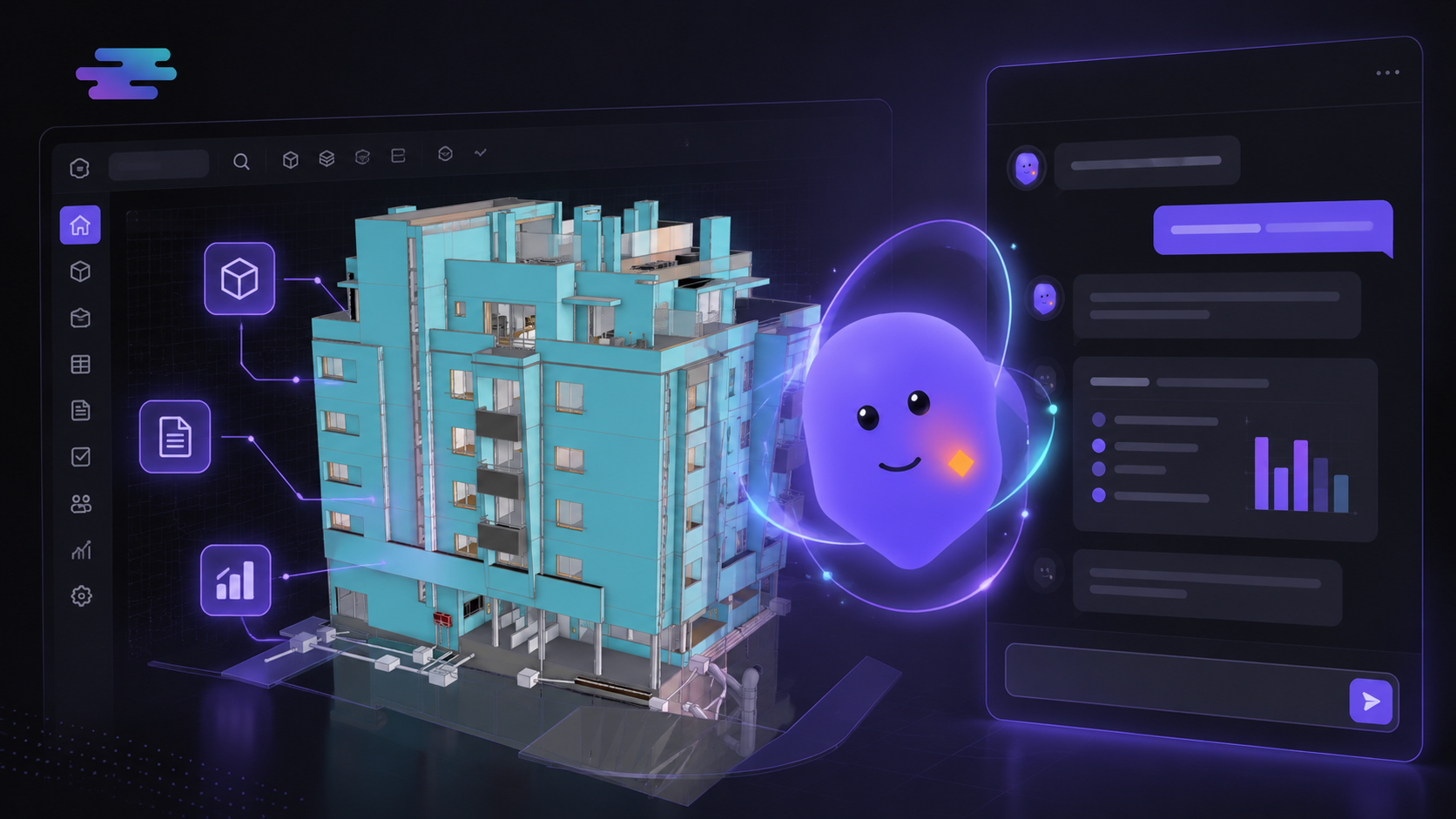
Modern BIM platforms centralize project data, enabling access to:
3D models and technical documentation
Construction schedules and execution plans
Budgeting and financial data
Quantity takeoffs and resource planning
Geospatial and site information
This centralized approach reduces human error and ensures that decisions are based on reliable data throughout the project lifecycle.
BIM acts as a single source of truth, allowing all stakeholders to understand the project regardless of their role or technical background.
The Role of BIM in Improving Connectivity
The BIM methodology enables structured collaboration by integrating data, processes, and teams into a unified environment.
It supports:
Real-time information sharing
Cross-discipline coordination
Early detection of conflicts
Alignment between planning and execution
This level of integration ensures that all project participants operate with the same information, reducing uncertainty and improving coordination.
Where BIMWorkplace Fits
Despite the advantages of BIM, adoption can be limited by the complexity of traditional tools and technical requirements.
BIMWorkplace addresses this challenge by providing an intuitive, cloud-based platform that simplifies access to project data.
No advanced technical expertise required
Accessible from any location
No need for high-performance hardware
Collaborative environment for all stakeholders
With BIMWorkplace, all team members can update models and project data in real time. This ensures that everyone works with current and consistent information, eliminating uncertainty about version control.
The platform supports a more connected and transparent workflow, reducing errors, delays, and cost overruns while improving overall project performance.
Conclusion
Maintaining connectivity between onsite and office operations is essential for efficient construction management. Projects that rely on fragmented communication face higher risks of delays, errors, and budget deviations.
By combining real-time data, centralized information, and collaborative platforms such as BIMWorkplace, companies can ensure alignment across all teams and achieve more predictable project outcomes.
Ready to see BIMWorkplace in action?
Centralize your project, your team, and your data in one platform built for AEC.
Get BIM insights in your inbox
Practical articles, product updates, and AEC best practices. No spam.