The Progress of BIM in Construction
Understand how BIM improves construction through data-driven workflows, reducing errors, enhancing coordination, and supporting sustainable project execution.
The Progress of BIM in Construction
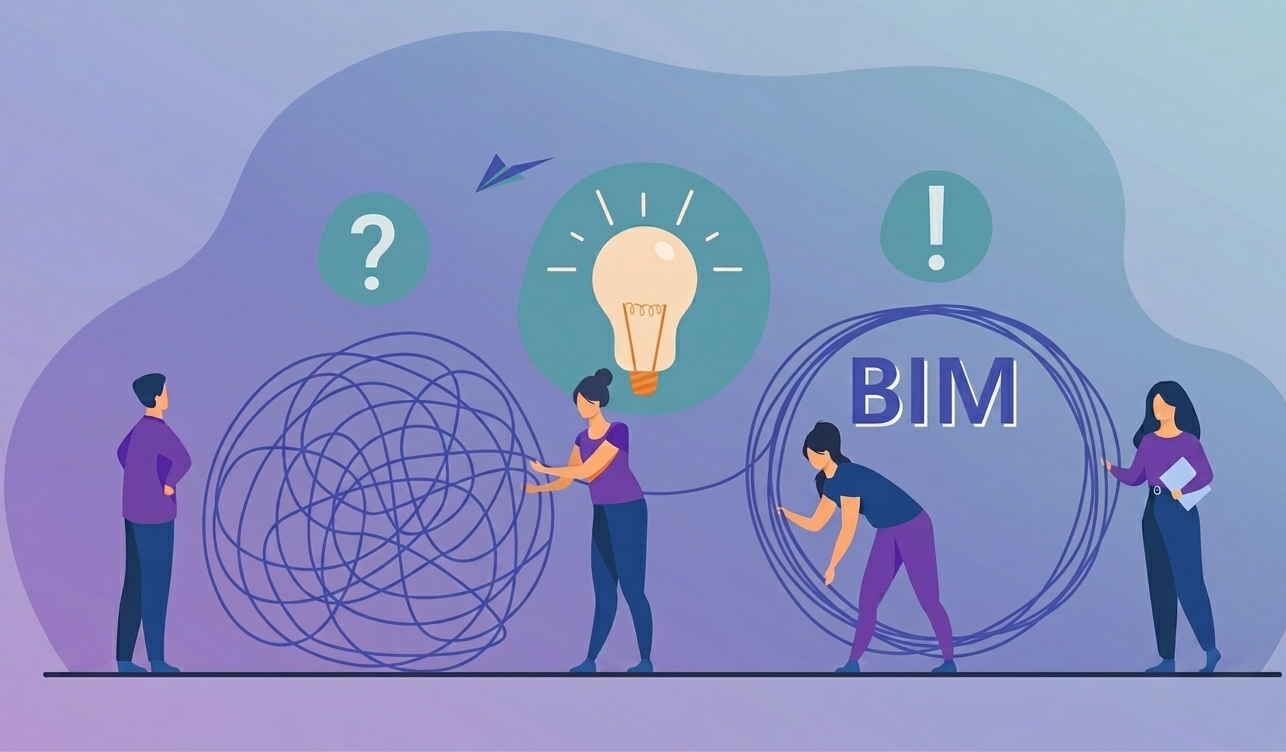
Building Information Modeling (BIM) is no longer a new concept in the construction industry. Despite this, some companies still resist its adoption, often viewing it as a costly investment with uncertain return.
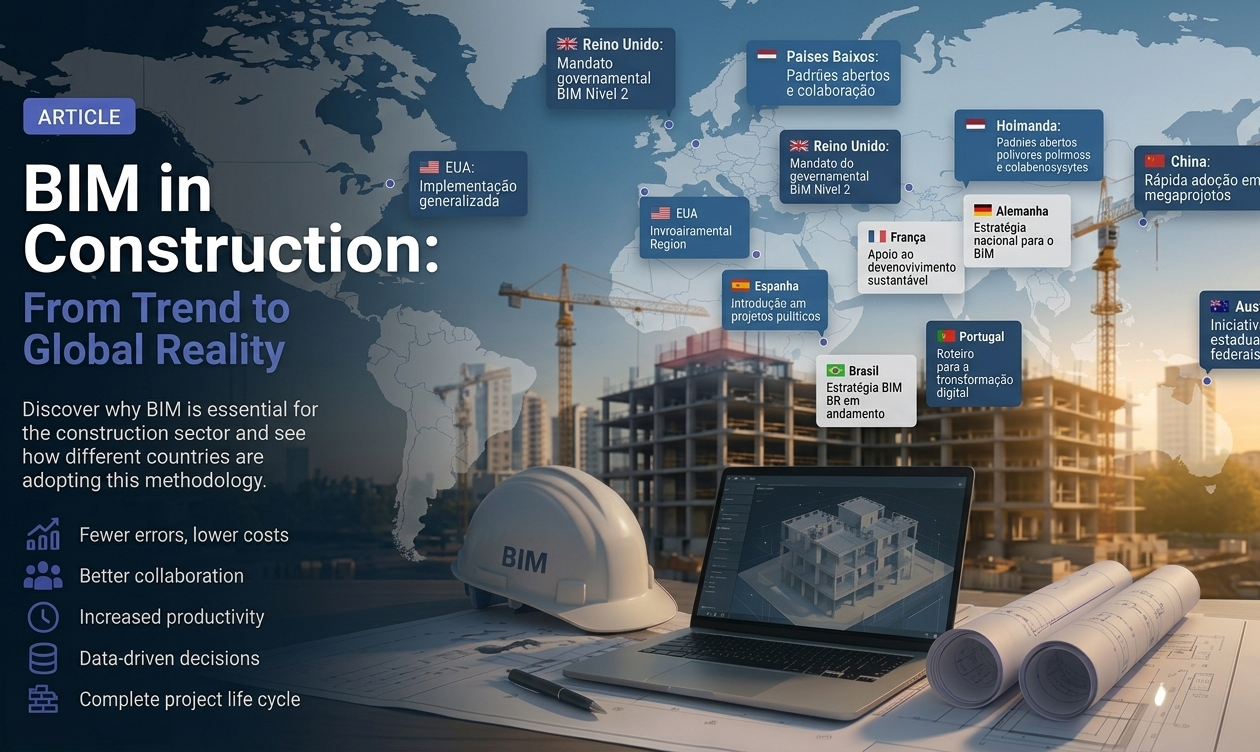
This perception is changing rapidly. In many countries, BIM is already required for public projects, and its adoption is becoming a regulatory and competitive necessity. Companies that delay this transition risk falling behind in efficiency, compliance, and project delivery standards.
What Differentiates BIM from Traditional Methods
BIM is frequently misunderstood as a simple evolution of 3D design. In reality, it represents a shift from drawing-based workflows to data-driven project management.
Limitations of Traditional CAD-Based Approaches
In CAD environments, elements such as walls and doors are represented by lines. These elements do not inherently contain data unless information is manually added.
Projects are primarily visual and two-dimensional
Data such as materials, quantities, and dimensions must be manually inserted
High dependency on human input increases the risk of errors
This approach is functional but prone to inconsistencies, especially in coordination between disciplines. Errors in quantities and compatibility can directly impact budgets and execution timelines.
How BIM Transforms Project Development
With BIM, the project is developed as a digital model enriched with structured information. Each element contains embedded data that can be accessed and analyzed in real time.
Automatic extraction of quantities and metrics
Integrated budgeting and scheduling capabilities
Lifecycle management from design to operation
Coordination between disciplines within a single environment
When a model element is created, all associated information such as materials, dimensions, and specifications is immediately available. Any change in the model triggers automatic updates across all related data, ensuring consistency.
The Value of 3D Visualization in BIM
Beyond data management, BIM enables accurate 3D visualization aligned with real construction conditions.
This allows professionals to:
Visualize the project before execution
Identify design conflicts early
Make informed decisions with reduced uncertainty
Early detection of issues reduces rework, shortens execution time, and helps control project costs.
The Impact of BIM on Construction Performance
The shift from traditional methods to BIM is accelerating across the industry. Organizations adopting BIM improve their ability to manage complexity and deliver projects with greater precision.
Reduced errors and rework
Improved coordination and communication
Greater control over costs and timelines
Higher efficiency across all project phases
These gains translate into measurable improvements in project outcomes and operational performance.
BIM and Sustainability in Construction
Sustainability has become a central concern in construction. BIM contributes directly to more sustainable practices by improving planning and reducing inefficiencies.
Reduction of material waste
Optimization of resource usage
Lower environmental impact during execution
By minimizing errors and unnecessary work, BIM supports more responsible construction processes and aligns with environmental goals.
Conclusion
The progress of BIM in construction reflects a broader shift toward data-driven and integrated project management. What was once seen as optional is quickly becoming essential.
Companies that adopt BIM improve efficiency, reduce risk, and align with evolving industry requirements. As regulations and market expectations continue to advance, BIM will remain a core component of modern construction practices.
Ready to see BIMWorkplace in action?
Centralize your project, your team, and your data in one platform built for AEC.
Get BIM insights in your inbox
Practical articles, product updates, and AEC best practices. No spam.