The Psychology of Collaboration in BIM
Discover how email slows BIM workflows and how structured collaboration improves productivity, decision speed, and project outcomes.
The Psychology of Collaboration: Why Email Is Sabotaging Your Job Site Productivity
The digital age promised faster decisions through instant communication. In practice, many construction teams experience the opposite: information overload and fragmented workflows.
According to the FMI/Autodesk “Construction Disconnected” report, professionals spend up to 35% of their time on non-productive tasks, more than 14 hours per week searching for data, resolving conflicts, and managing emails.
Although email is often seen as a record-keeping tool, it has become one of construction’s largest information silos. When decision-making depends on scattered message threads and attachments, teams are not managing information, they are managing documented chaos.
Context vs. Conversation: The Missing Link
The main barrier to productivity is not lack of effort, it is the loss of context.
In email-based workflows, information is disconnected from the physical elements of the project. Decisions exist as isolated conversations rather than structured data linked to the model.
The Decision Latency Problem
When a technical query (RFI) is sent via email, it enters an unstructured priority queue. Without a direct connection to the model, response times increase and coordination slows down.
This leads to:
Delayed responses from design teams
Work interruptions on-site
Execution based on assumptions
Increased risk of rework
Decision latency becomes a hidden cost, impacting both schedule and quality.
The Shift to Context-Based Collaboration
High-performing teams move from text-based communication to context-driven workflows.
Instead of emails, issues are managed as structured topics linked directly to the model. This ensures that:
Information is tied to specific elements
Decisions are clear and unambiguous
Response times are significantly reduced
Platforms like BIMWorkplace enable this transition by connecting communication directly to project data, reducing decision latency and improving coordination efficiency.
The Three Pillars of High-Performance Collaboration
To achieve predictable outcomes and reduce risk, communication must be treated as a structured engineering process, not an informal exchange.
1. Centralization of Context
All decisions must be anchored in a Single Source of Truth.
Approved changes must be linked to project elements
Information must reside within the CDE, not personal inboxes
This ensures continuity, even when team members change.
2. Status-Driven Workflows
Informal approvals, such as “OK” in an email, are not reliable or auditable.
Structured workflows use defined statuses to formalize decisions:
Approved
In Review
Closed
This transforms communication into traceable contractual milestones.
3. Field Accessibility and Mobility
Effective collaboration requires that information reaches the job site clearly and in real time.
Field teams access the same data as office teams
Decisions are supported by images, annotations, and 3D models
Mobile access ensures alignment across all stakeholders
This eliminates communication gaps between design and execution.
The Top ROI Drains in Communication
Inefficient communication directly impacts profitability. The most common issues include:
1. Over-Copying and Information Noise
Copying multiple stakeholders to “cover responsibility” creates cognitive overload and reduces accountability.
Effective systems assign clear ownership and deadlines to each task.
2. Static and Obsolete Data
Sharing files via email attachments leads to outdated information being used in execution.
Teams may work on incorrect versions
Errors propagate across disciplines
The cost of executing with outdated data can exceed the project’s profit margin.
3. Lack of Auditability
Without a structured audit trail, organizations cannot reconstruct decisions or defend them in disputes.
An immutable history of actions and approvals is essential for both operational control and legal protection.
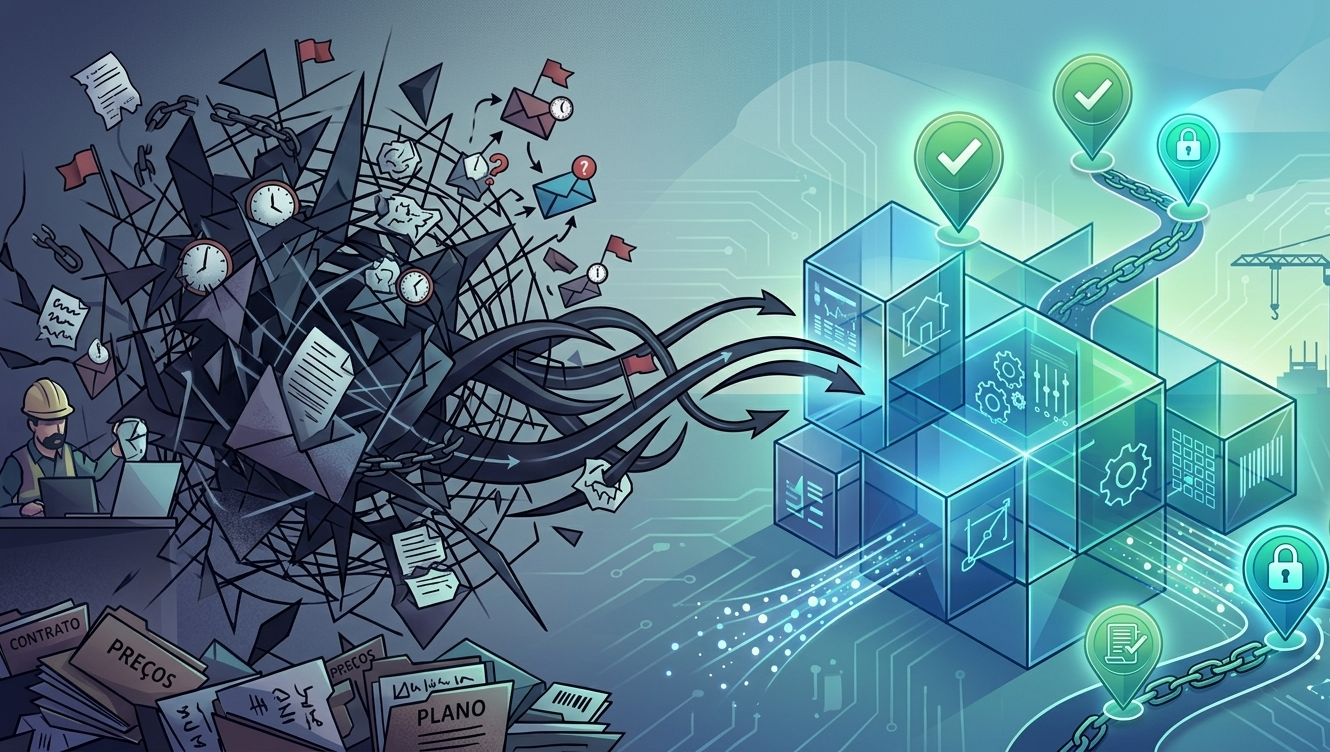
From Communication Chaos to Structured Collaboration
Replacing email as the primary coordination tool is not just a technological change, it is a cultural shift in how teams manage information.
When all stakeholders operate within a centralized, structured environment, the benefits are immediate:
Reduced stress and fewer misunderstandings
Faster decision-making
Improved coordination between office and site
Greater protection of project margins
Conclusion
Email is not designed to manage complex construction workflows. Its limitations create fragmentation, delay decisions, and increase risk.
Modern BIM environments require context-driven collaboration, structured workflows, and full traceability.
Organizations that adopt these principles move from reactive communication to controlled, efficient project delivery.
In an industry defined by tight deadlines and financial pressure, how you communicate is as critical as what you build.
Ready to see BIMWorkplace in action?
Centralize your project, your team, and your data in one platform built for AEC.
Get BIM insights in your inbox
Practical articles, product updates, and AEC best practices. No spam.