Tips for Choosing Construction Management Software
Key tips to choose construction management software that improves efficiency, collaboration, and data control in AEC projects.
Tips for Choosing Construction Management Software
The construction industry continues to grow in complexity, increasing the demand for efficient digital tools to manage projects, teams, and data. As a result, the market has seen a rapid expansion of construction management software solutions.
However, choosing the right platform is not a matter of price alone. It requires a clear understanding of your company’s needs and a focus on long-term operational efficiency.
Define Your Needs and Future Requirements
The first step in selecting construction management software is to identify your core requirements. This includes understanding current workflows, project challenges, and operational gaps.
At the same time, companies should consider future needs. Construction processes evolve, and the chosen solution must be able to adapt and scale accordingly.
Map current processes and identify inefficiencies
Define key functionalities required for your projects
Evaluate scalability for future growth
Prioritize Flexibility and Continuous Development
Not all software solutions evolve at the same pace. Selecting a platform that is actively developed ensures alignment with industry standards and emerging practices.
Flexible software allows companies to integrate new workflows, adopt updated methodologies, and respond to changing project demands without disruption.
Evaluate Critical Technical Factors
Beyond functionality, several technical aspects directly impact the effectiveness of construction management software.
Key Considerations
Data privacy and security: Ensure that sensitive project information is protected
System integration: Verify compatibility with existing tools and platforms
Customer support: Assess the quality and availability of technical assistance
These factors are essential to ensure reliable adoption and long-term use across teams.
BIMWorkplace: A Unified Platform for BIM and Project Management
BIMWorkplace is designed to support BIM professionals and construction teams by centralizing project data and workflows in a single environment. Built by industry specialists, the platform focuses on data accessibility, collaboration, and control.
Key Features
Cloud-based access: Work from any location with real-time data availability
Collaborative environment: Create workspaces and manage multiple users within the same project
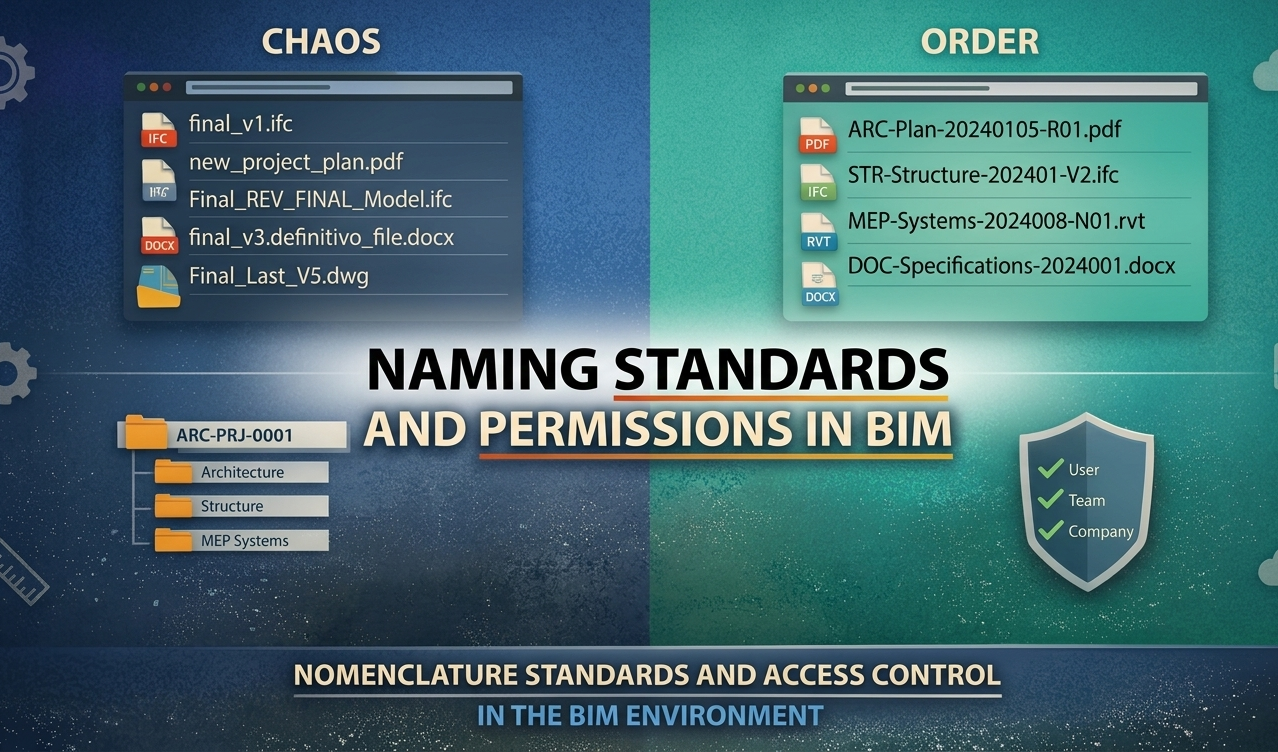
Permission control: Define user roles to ensure data security and governance
Data centralization: Consolidate all project information in one platform
Integration with Autodesk Revit: Maintain workflow continuity with existing tools
Support for .IFC and .RVT files: Enable interoperability across BIM models
Excel integration: Export, edit, and reimport data efficiently
By consolidating information and enabling structured collaboration, BIMWorkplace helps reduce common project risks, including delays, errors, and cost overruns.
Conclusion
Choosing the right construction management software requires a strategic approach. Companies should prioritize solutions that align with their processes, support future growth, and ensure secure, integrated workflows.
Platforms that combine flexibility, collaboration, and data management capabilities provide a strong foundation for improving project performance and decision-making in the AEC industry.
Ready to see BIMWorkplace in action?
Centralize your project, your team, and your data in one platform built for AEC.
Get BIM insights in your inbox
Practical articles, product updates, and AEC best practices. No spam.