Version Chaos in BIM: The Hidden Risk
Discover how version chaos in BIM creates risks and how to structure traceability to prevent rework.
Version Chaos in BIM: The Invisible Risk That Compromises Margin, Schedule, and Governance
Version chaos in BIM is not a technical issue, it is a financial and contractual risk disguised as an operational flaw.
In organizations already using tools like Revit and Navisworks, errors rarely originate in modeling. Instead, they arise from a lack of formal control over which version is valid, who approved changes, and when decisions were made.
As models evolve, decisions continue to circulate through emails, spreadsheets, and shared drives. The outcome is predictable: rework, delays, and increased legal exposure.
The Invisible Cost of Using the Wrong Version
Working with an incorrect model version does not result in minor adjustments, it leads to physical rework, schedule disruption, and margin erosion.
When teams operate on outdated revisions:
Quantities no longer reflect reality
Coordination must be repeated
Decisions are revisited too late
Previously completed work is redone
The direct cost appears on-site. The hidden cost manifests in wasted technical hours, reduced credibility, and loss of financial predictability.
For decision-makers, the implication is clear: every version error reduces margin. For BIM Coordinators, every uncontrolled revision increases operational workload.
Version chaos is not disorganization, it is accumulated risk.
Contractual Risk from Incorrect Revisions
In environments with low traceability, the key issue is not identifying who made a mistake, it is proving which version was valid at a given moment.
Without structured version control and audit logs, organizations cannot demonstrate:
Which document was officially in force
Who approved specific changes
When revisions were released
Who executed based on that information
In contractual disputes, this lack of governance transforms operational errors into legal and financial liabilities.
BIM governance is financial protection. Without traceability, BIM becomes a visualization tool rather than a mechanism for risk control.
How Fragmentation Creates Rework
Many organizations operate with intermediate BIM maturity, combining:
Revit for model authoring
Navisworks for coordination and clash detection
Shared drives or partial CDEs for storage
Spreadsheets for issue tracking
The problem is not the tools themselves, it is the lack of integration between them.
A typical fragmented workflow includes:
Model updates in Revit
Manual exports to Navisworks
Clash detection execution
Results tracked in spreadsheets
Issues communicated via email
Files stored in shared drives
Uncertainty about the latest version
Each manual step increases the probability of error. The BIM Coordinator becomes a file gatekeeper, managing uploads instead of coordinating decisions.
This fragmented environment leads to:
Multiple versions of the same model
Duplicated folders and files
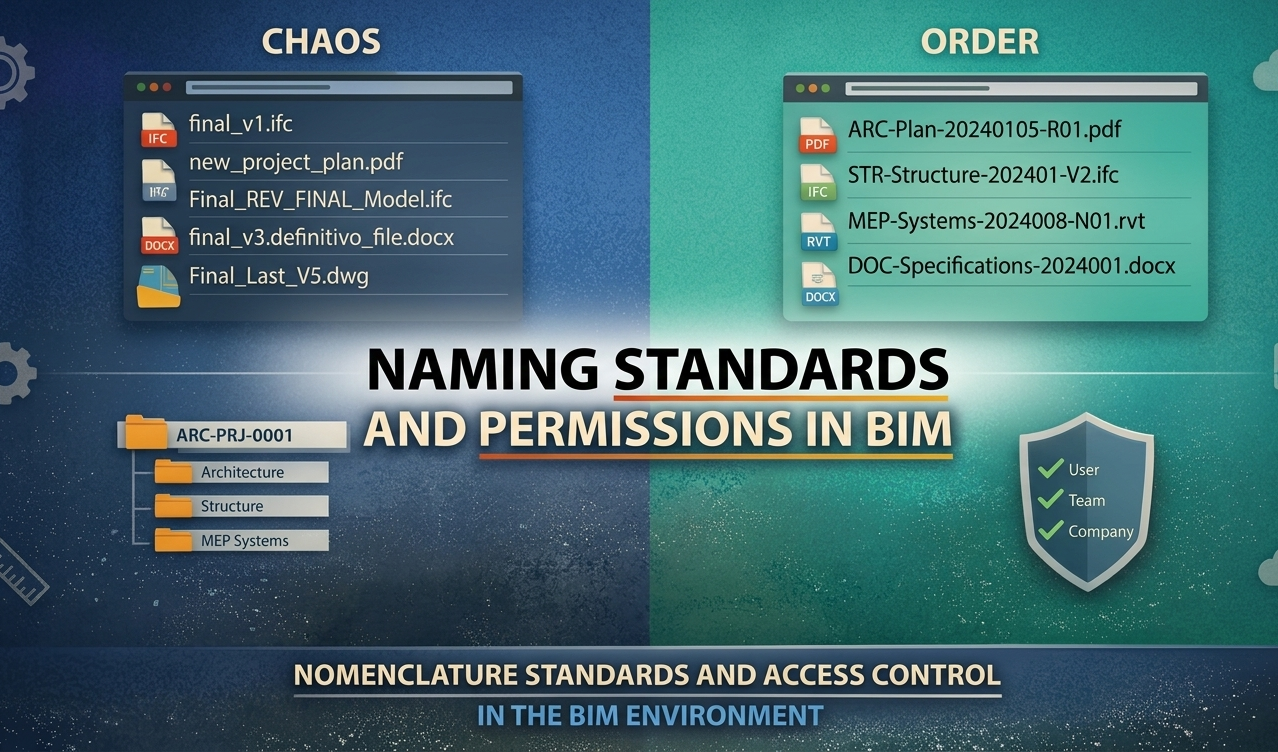
Inconsistent naming conventions
Decisions without formal records
Rework is not accidental, it is the direct result of fragmented workflows.
How to Structure Real Traceability
Eliminating version chaos requires more than discipline, it requires structured process control.
Effective traceability is built on four key pillars:
1. Automatic Versioning
Sequential version numbering
Date and time stamps
Automatic identification of the responsible user
Without automation, control depends on manual naming and individual memory.
2. Auditable Version History
Complete record of all previous versions
Clear comparison between revisions
Visibility of who published each version and when
Traceability is not storage, it is structured history.
3. Clear Responsibility
Each version must be linked to a clearly identifiable owner. Without defined authorship, there is no accountability or governance.
4. Integration with BIM Workflows
Revit and Navisworks remain essential tools for modeling and coordination. However, the critical layer is the control of information flow between them.
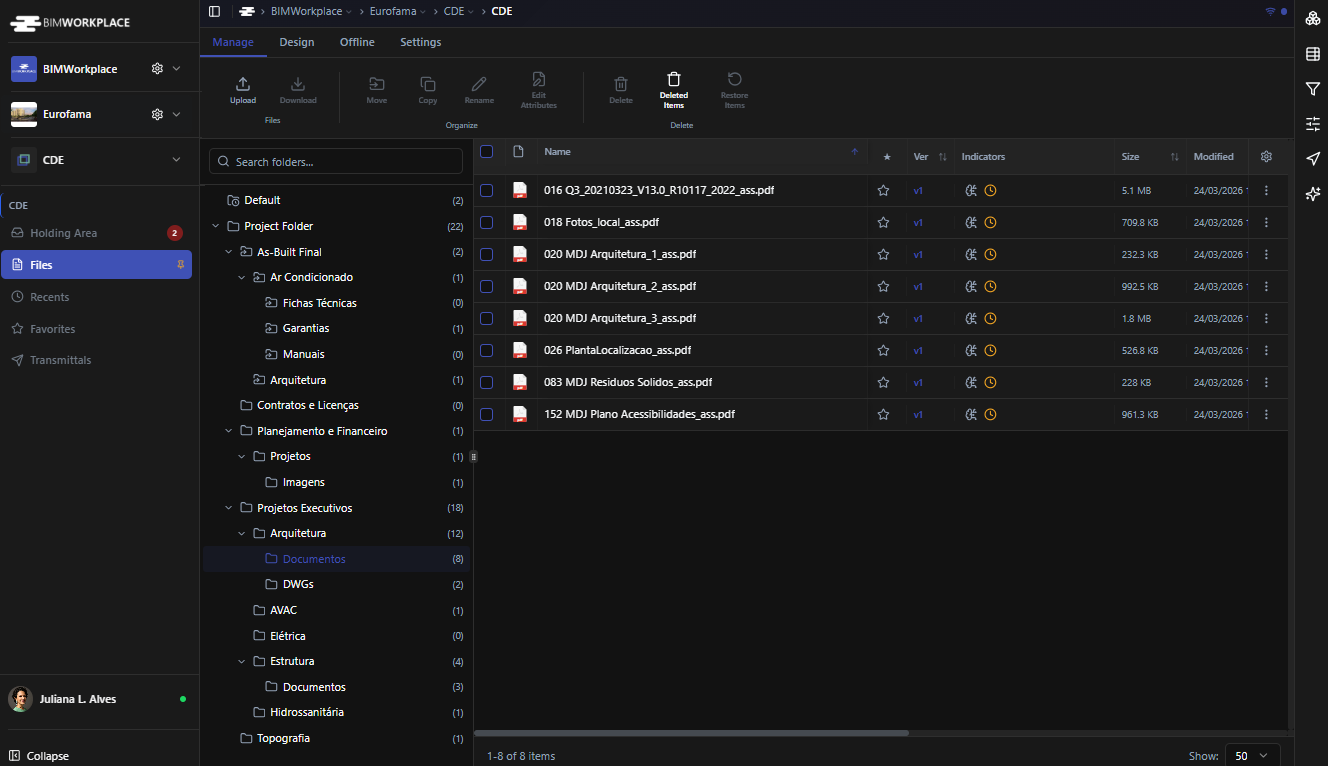
This is where platforms like BIMWorkplace operate, centralizing models, versions, issues, and decisions in a controlled environment. Versioning becomes automatic, history is preserved, and responsibilities are clearly recorded.
The result is not only better organization, but also reduced contractual risk and improved operational predictability.
Conclusion: Version Chaos Is a Governance Problem
Organizations do not lose money because of modeling, they lose money because they lack control over information flow and version management.
Version chaos transforms technical decisions into financial risk. Without traceability, every incorrect revision becomes a potential loss.
For decision-makers, the key question is: Do we truly control the versions that support our decisions?
For BIM Coordinators: How much time is spent managing files instead of managing coordination?
Structuring workflows is not optional, it is financial protection.
In an environment of compressed margins, regulatory pressure, and increasing contractual exposure, version control is no longer a technical detail, it is a business-critical requirement.
Ready to see BIMWorkplace in action?
Centralize your project, your team, and your data in one platform built for AEC.
Get BIM insights in your inbox
Practical articles, product updates, and AEC best practices. No spam.