No More Chaos: BIM Collaboration Errors and ISO 19650
Discover the most common BIM collaboration errors and how ISO 19650 helps eliminate risk through structured information management.
No More Chaos: The Most Common Collaboration Errors and How ISO 19650 Solves Them
If the question “Which model version should we use today?” creates hesitation within your team, you are already experiencing the cost of weak information management.
The promise of Building Information Modeling (BIM), efficiency, coordination, and predictability is often compromised not by software limitations, but by the absence of structured data governance.
In technical project environments, inconsistent information equals risk. ISO 19650 provides the framework to eliminate this uncertainty by defining clear processes for managing information throughout the project lifecycle. At the core of this framework is the Common Data Environment (CDE), the central system where all project information is controlled and validated.
This article explores the most common collaboration errors that lead to non-compliance—and how ISO 19650 addresses them.
Lack of a Single Source of Truth
One of the fundamental requirements of ISO 19650 is the creation of a Single Point of Truth.
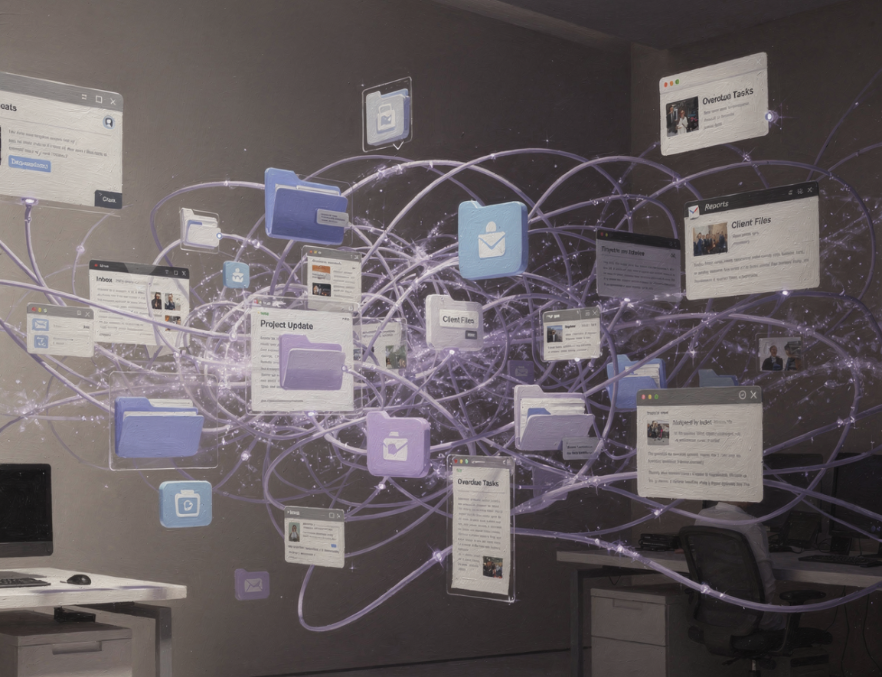
When teams rely on disconnected tools, such as email for models, cloud drives for documents, and messaging apps for decisions, information authority is lost. There is no clear indication of which version is valid or approved.
This results in:
Multiple conflicting file versions
No reliable version control
Lack of traceability for decisions
Compliance requires a centralized CDE that acts as the only trusted source for accessing project information and validated versions.
Ineffective Information Sharing
Accessing the wrong information at the wrong time is one of the most expensive coordination errors.
Without structured access control, teams may work with unvalidated or incomplete data, leading to rework and delays.
Common risks include:
Contractors using “work in progress” models
External stakeholders accessing incomplete deliverables
Decisions based on outdated information
ISO 19650 requires controlled information sharing, where access is segmented based on roles and project stages. Only validated information should be available for construction or external use.
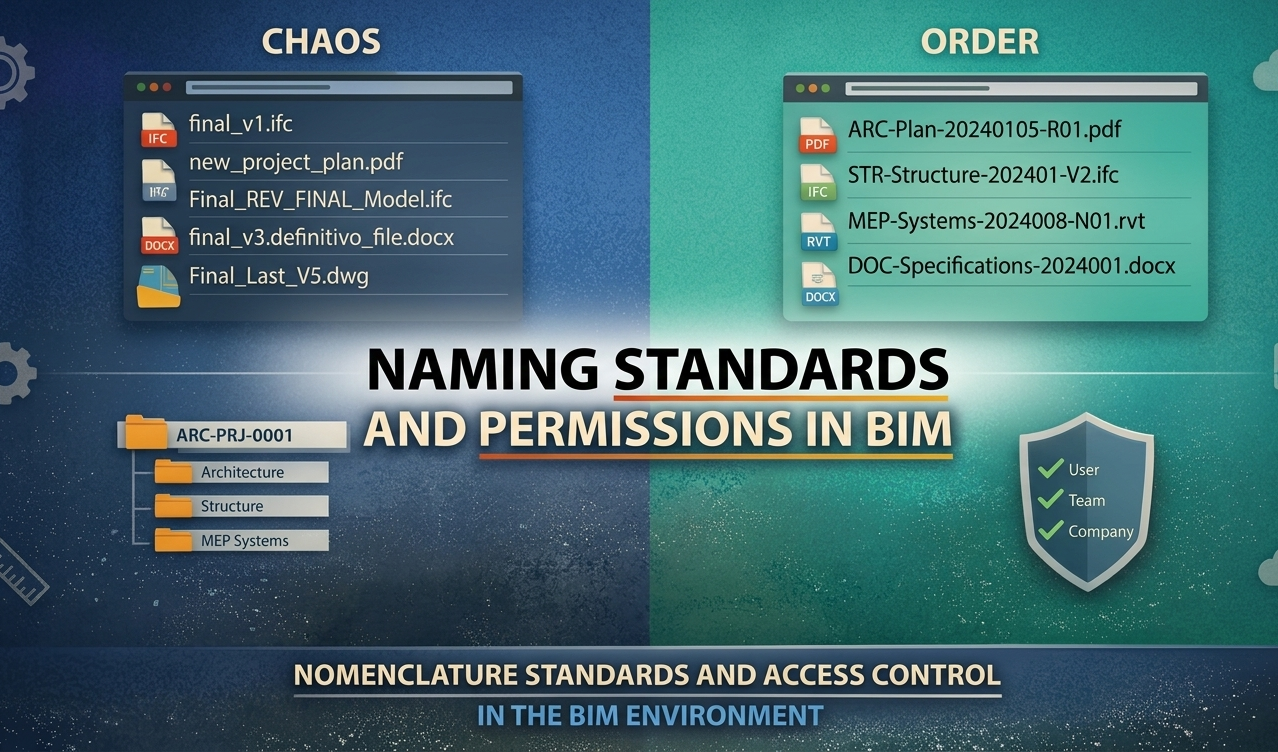
Non-Standardized Naming Conventions
File naming is often underestimated, yet it is critical for maintaining data consistency and automation.
When each team uses its own naming logic, the entire system becomes inefficient:
Files are difficult to locate
Automation processes fail
Model federation becomes unreliable
ISO 19650 defines structured naming conventions, allowing teams to identify file content, origin, and version instantly. Standardization ensures that data can be managed, filtered, and validated efficiently.
Imbalance in the Level of Information
Delivering too much or too little information at the wrong stage creates inefficiency and misalignment.
Without clear guidance, teams may:
Over-model unnecessary details
Provide insufficient data for decision-making
Misalign deliverables with project requirements
ISO 19650 addresses this through defined information requirements, ensuring that each deliverable matches the needs of the project phase and client expectations.
Fragmented Issue Management
Managing issues outside the project environment breaks traceability.
When clashes, RFIs, or coordination problems are tracked through spreadsheets or emails, they become disconnected from the model and project data.
This leads to:
Lack of confirmation that issues were resolved
No link between problems and model updates
Incomplete audit trails
ISO 19650 requires that issue management is integrated within the CDE, ensuring that all problems are documented, tracked, and linked to the relevant project information.
From Chaos to Control with ISO 19650
Most BIM project failures are not caused by technical limitations, but by process and information management gaps.
ISO 19650 provides a structured framework to eliminate these risks by introducing:
A Single Source of Truth through a centralized CDE
Controlled information sharing with role-based access
Standardized naming conventions for consistency
Defined information requirements across project phases
Integrated issue management with full traceability
Platforms like BIMWorkplace operationalize these principles by centralizing models, data, workflows, and issue tracking into a single environment, ensuring compliance and improving coordination efficiency.
Conclusion
Collaboration chaos in BIM is not inevitable, it is the result of unmanaged information flows.
ISO 19650 offers a clear path to structured, reliable, and compliant project delivery. By implementing a robust CDE and standardized processes, organizations can reduce risk, improve coordination, and protect project outcomes.
In a market defined by tight margins and increasing complexity, information management is no longer optional, it is a strategic capability.
Ready to see BIMWorkplace in action?
Centralize your project, your team, and your data in one platform built for AEC.
Get BIM insights in your inbox
Practical articles, product updates, and AEC best practices. No spam.